Complex components often contain curved surfaces, angled holes, deep cavities, and features positioned on several sides. When these parts are produced on a conventional three-axis machine, operators may need to stop machining, reposition the workpiece, reset the datum, and verify the new clamping position several times.
Every additional setup adds handling time and introduces another opportunity for positioning error. This becomes especially important in aerospace, automotive, mold, medical, and energy applications, where manufacturers may need to maintain dimensional relationships between multiple surfaces.
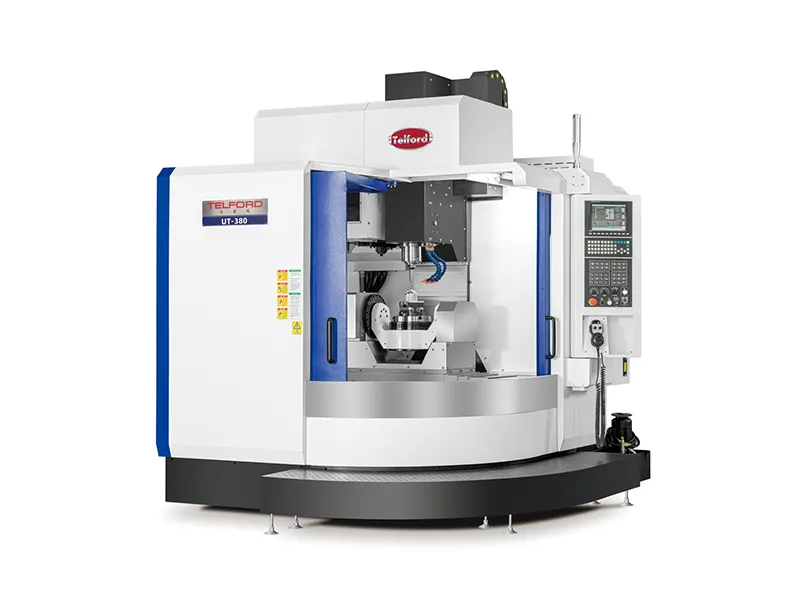
A 5 axis machining center addresses this challenge by combining three linear axes with two rotary axes. The cutting tool can approach the workpiece from different directions, enabling more features to be completed in a single setup. The result is not only greater geometric flexibility but also a more controlled production process for complex parts.
Why One-Setup Machining Matters for Complex Components
On a traditional machining route, a component may move through several fixtures or even several machines. Each transfer requires the operator to relocate the part accurately. Small deviations between setups can accumulate and affect hole position, surface alignment, and overall dimensional consistency.
By working with experienced 5 axis machining center manufacturers, buyers can evaluate whether several milling, drilling, and surface-machining operations can be combined into one machining cycle.
One-setup production offers several practical advantages:
Fewer manual clamping operations
Reduced datum-transfer errors
Better positional relationships between features
Shorter work-in-process time
Less dependence on special fixtures
More consistent production between operators and shifts
TELFORD’s five-axis machining center range is designed for simultaneous multi-axis machining of complex curved surfaces. Its product page also highlights one-setup processing, strict-tolerance machining, and applications in industries such as aerospace and mold manufacturing.
Simultaneous 5-Axis Machining vs. Indexed Machining
A five-axis machine can generally be used in two main ways.
In indexed or 3+2 machining, the rotary axes position the workpiece at a selected angle and remain fixed while the three linear axes perform the cutting operation. The machine then indexes to another angle for the next feature. This method is useful for angled holes, multiple faces, and components that do not require continuous rotary movement during cutting.
A simultaneous 5-axis machining center moves the linear and rotary axes together while the tool is cutting. This allows the cutting tool to follow complex contours and maintain a suitable orientation relative to the workpiece surface.
Simultaneous machining is particularly useful for:
Impellers and blisks
Turbine-related components
Aerospace structural parts
Medical components
Complex molds and dies
Curved automotive components
A capable CNC control, accurate rotary-axis motion, and properly prepared tool paths are essential. Five-axis capability alone does not guarantee a successful process; programming, collision checking, tool selection, and fixturing must also be coordinated.
What Determines the Performance of a 5-Axis CNC Machining Center?
The performance of a 5 axis CNC machining center depends on the complete machine system rather than the number of axes alone.
Linear and Rotary Axis Travel
The X-, Y- and Z-axis travels determine the basic machining envelope, while the rotary axes determine how the workpiece can be tilted and rotated. Buyers must confirm that sufficient clearance remains for the fixture, cutting tool, and spindle when the table is positioned at an angle.
TELFORD lists UT-series models with different working travels. The published configurations include X-axis travel from 550 to 800 mm, Y-axis travel from 450 to 650 mm, and Z-axis travel from 500 to 600 mm across the compared models.
Spindle Capability
The spindle must match the workpiece material, tool diameter, and cutting strategy. High-speed machining may be important for aluminum, molds, and smaller tools, while torque and rigidity become more important during heavier material removal.
TELFORD’s listed UT-series configurations provide maximum spindle speeds of up to 15,000 rpm. Final suitability should still be evaluated according to the material, tool, and required production cycle.
Structural Rigidity
During five axis machining, changes in table angle and tool orientation alter the direction of cutting forces. Machine rigidity, bearing support, and guideway stability help control vibration and maintain the intended tool path.
The product configuration also includes key components such as ball screws, linear guideways, spindle assemblies, bearings, tool magazines, and control panels. These systems must work together to support repeatable axis movement and stable machining.
Rotary-Axis Accuracy
The A and C axes influence angular positioning and the relationship between machined surfaces. Backlash, calibration, and rotary-axis repeatability are therefore critical when producing parts with tight positional or contour requirements.
Buyers should confirm how rotary-axis accuracy is tested and how the machine’s rotation center is calibrated during installation and maintenance.
Applications of Five-Axis CNC Milling Machines
A 5 axis CNC milling machine is most valuable when part geometry would otherwise require repeated repositioning or complex fixtures.
In aerospace production, five-axis machining can be applied to structural parts, curved profiles, and components requiring access from several directions. Automotive manufacturers may use it for prototype parts, molds, performance components, and new-energy vehicle components.
Mold manufacturers can use a five axis CNC milling machine to improve access to deep cavities and inclined surfaces. A shorter tool may sometimes be used because the spindle or workpiece can be tilted toward the cutting area, helping improve rigidity and surface quality.
Medical and energy-sector components may also benefit from controlled multi-face machining, particularly when dimensional relationships must be maintained across complex surfaces. TELFORD identifies aerospace, automotive, mold, medical, and energy industries as relevant application areas for its five-axis equipment.
When Other Machining Center Structures May Be More Suitable
A five-axis machine is not automatically the best solution for every workpiece. The correct machine structure depends on part size, geometry, cutting load, and production volume.
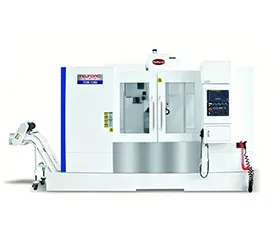
For box-shaped components requiring efficient chip evacuation and heavy cutting, a horizontal machining center may provide a more suitable production route. TELFORD describes its horizontal models as having a horizontal spindle layout, high rigidity, and suitability for high-volume box-type components.
For very large molds, structural parts, and heavy workpieces, a standard rotary-table five-axis machine may not provide sufficient travel or load capacity. In these cases, a gantry machining center can offer a larger worktable, extended travel, and greater support for heavy-duty cutting. TELFORD’s gantry range is positioned for large components, molds, and structural parts used in heavy industry.
A 5 axis gantry machining center may also be considered when a large component requires angled or multi-surface processing, although the final machine structure must be evaluated against the actual workpiece dimensions and process requirements.
What Buyers Should Provide to a 5-Axis Machining Center Manufacturer
Before requesting a technical proposal, buyers should prepare enough production information for the manufacturer to evaluate the process accurately.
Useful information includes:
2D or 3D workpiece drawings
Raw material and stock dimensions
Finished-part size and weight
Dimensional and geometric tolerances
Surface-finish requirements
Monthly or annual production volume
Required drilling, milling, and contouring operations
Existing tools, fixtures, and CNC programming systems
Target production cycle
Inspection and acceptance requirements
A professional 5 axis machining center manufacturer should review more than the maximum workpiece dimensions. Tool reach, fixture clearance, rotary-table load, spindle access, and possible collision areas must also be considered.
For representative projects, sample machining can help verify whether the proposed 5 axis mill machine can achieve the required cycle time, dimensional consistency, and surface finish.
How to Evaluate a 5-Axis Machining Center for Sale
When comparing a 5 axis machining center for sale, purchase price should not be the only deciding factor. Two machines with similar axis travels may provide very different production results depending on spindle performance, rotary-axis design, tool capacity, control functions, and technical support.
A quotation should clearly define:
Machine model and working travel
Rotary-table size and load capacity
A- and C-axis movement
Spindle speed, taper, and power
Tool-magazine capacity
CNC control system
Standard and optional accessories
Installation and training scope
Accuracy testing and acceptance method
Warranty and spare-parts support
The objective is to select a machine that can produce the required component reliably, not simply to purchase the lowest-priced 5 axis mill.
FAQ About 5-Axis Machining Centers
What is the main advantage of a five-axis machining center?
Its primary advantage is the ability to approach a workpiece from multiple directions and complete more features in one setup. This reduces repeated clamping and helps maintain positional relationships between complex surfaces.
Is every 5-axis CNC machine capable of simultaneous machining?
Not necessarily. Some configurations are mainly used for indexed 3+2 machining, while others support continuous simultaneous movement. Buyers should confirm the machine structure, CNC control functions, and intended application.
What parts are suitable for a 5-axis milling machine?
Typical parts include impellers, curved aerospace components, complex molds, medical parts, and components containing inclined holes or features on several faces.
Can a 5-axis machine replace all three-axis machining centers?
No. Three-axis machines remain efficient for simpler components and straightforward surface machining. Five-axis equipment is more valuable when it reduces setups, fixtures, or secondary processes on complex parts.
What should be tested before accepting a 5-axis CNC milling machine?
Acceptance can include axis accuracy, rotary-axis positioning, spindle performance, tool changing, safety functions, and machining of a representative sample part. The test method should be agreed before delivery.
Conclusion
A 5 axis machining center creates value by reducing setups, improving access to complex features, and supporting consistent machining of curved or multi-sided components. However, successful implementation depends on selecting the correct travels, rotary-table capacity, spindle, tooling, and control functions for the actual workpiece.
As one of the 5 axis CNC machining center manufacturers serving complex machining applications, TELFORD provides UT-series five-axis machining centers for different working ranges. Buyers can submit part drawings, materials, tolerances, and production targets to discuss an appropriate machine configuration for aerospace, automotive, mold, medical, and other precision manufacturing projects.