Producing one accurate turned component is different from maintaining the same result across hundreds or thousands of cycles. During extended production, heat accumulation, vibration, tool wear, workholding variation and chip buildup can gradually affect dimensions and surface finish. For manufacturers of shafts, sleeves, discs, flanges and other rotational parts, repeatability is therefore as important as the accuracy of the first sample.
A high precision CNC lathe combines controlled axis motion with a rigid structure, stable spindle rotation and repeatable tool positioning. However, machine specifications alone do not guarantee final part quality. The configuration must match the material, geometry, tolerance, surface requirement, batch volume and target cycle time.
This is why the role of a high precision CNC lathe manufacturer extends beyond supplying a standard machine. The manufacturer should help translate the buyer’s drawing and production goals into a practical combination of machine structure, tooling, workholding, chip management and automation.
Why Accuracy Can Change During Long Production Runs
A part may pass inspection during setup but begin to drift after the machine has operated for several hours. Common causes include temperature changes in the spindle and guideways, progressive tool wear, unstable clamping, accumulated chips and cutting parameters that generate excessive vibration.
Repeatability should therefore be evaluated under realistic production conditions. A sample test should not only confirm whether a high precision CNC lathe manufacturer can deliver one acceptable component. It should also show whether dimensions, roundness and surface finish remain consistent across several consecutive parts.
Machine Rigidity Is the Foundation of Precision Turning
The cutting tool applies force to the workpiece during turning, boring, facing, grooving and threading. If the bed, guideways, turret or tool holder deflects under load, the actual cutting path may differ from the programmed path.
A rigid machine foundation helps limit vibration and structural deformation. TELFORD’s precision-lathe range uses high-rigidity beds together with box-type guideways or precision linear guides, depending on the model and application. These features are intended to support stable long-term machining.
When assessing a high precision lathe machine, buyers should consider the real cutting load. A compact machine for small shaft parts has different requirements from a machine intended for long shafts or heavy cutting. The correct structure should therefore be determined from the component rather than machine size alone.
Spindle Stability and Thermal Management
The spindle directly affects rotational accuracy, workpiece roundness and surface quality. Stable bearings and low spindle runout support consistent rotation, while cooling and heat-dissipation systems help limit accuracy drift caused by thermal expansion.
Heat is generated by the spindle, cutting process and guideway movement. Over long operating periods, it can change the relative position of the cutting tool and workpiece. Correct lubrication, clearance compensation and alignment checks also contribute to long-term accuracy.
A capable high precision CNC lathe manufacturer should explain how the selected machine manages thermal growth and how maintenance procedures support continued precision.
Tooling, Workholding and Automation Must Work Together
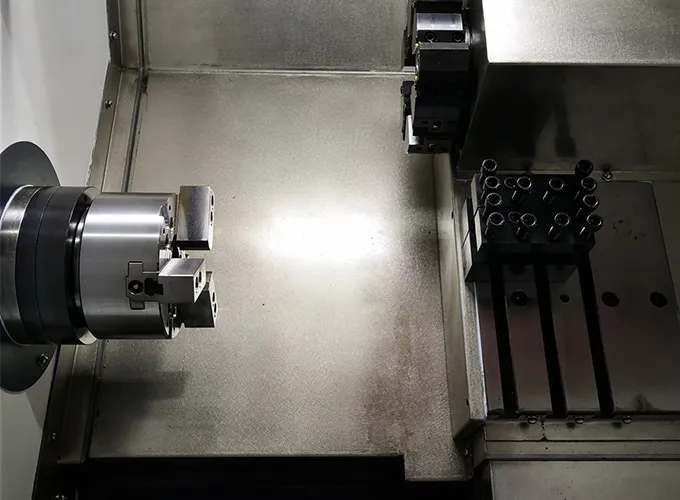
Even a stable machine cannot compensate for unsuitable tooling or inconsistent workholding. Tool holders must provide rigidity and repeatable positioning, while the chuck or fixture must locate each workpiece without distortion or excessive runout.
For volume production, automation can reduce variation caused by manual loading. A CNC precision automatic lathe may be configured with robotic loading, tool setters, measuring probes, chip conveyors or other optional systems according to the selected model and process.
TELFORD also offers configurable workholding, automatic loading devices and tooling packages for production-specific requirements. These additions can help shorten cycle time, reduce manual handling and improve consistency when they are designed around the actual raw material and finished-part geometry.
Automation is most effective when the loading orientation, chuck interface, finished-part discharge and inspection method are planned as one system. Adding a robot without considering these interfaces may move the bottleneck rather than improve the complete production cycle.
Matching the Machine Process to Part Geometry
Not every rotational component requires the same machine structure. Parts dominated by external and internal turning, facing, boring, threading or grooving can generally be produced efficiently on a CNC lathe machine.
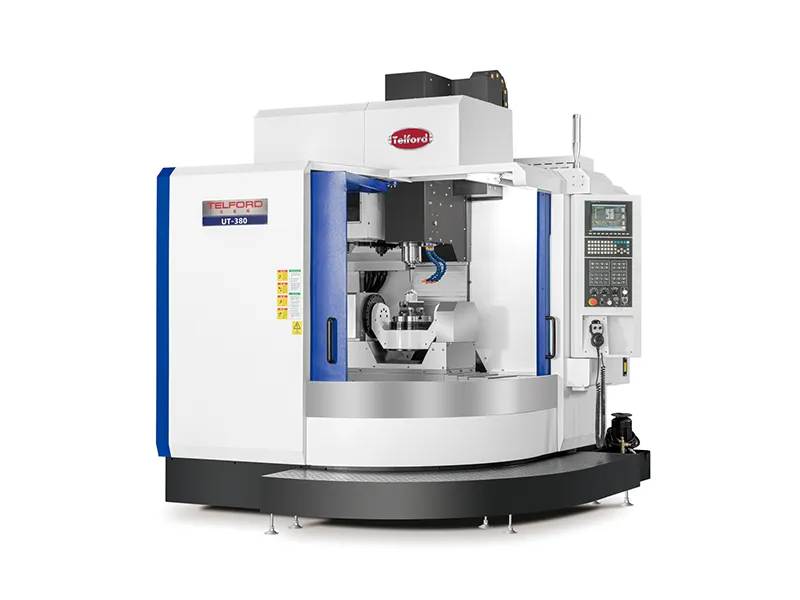
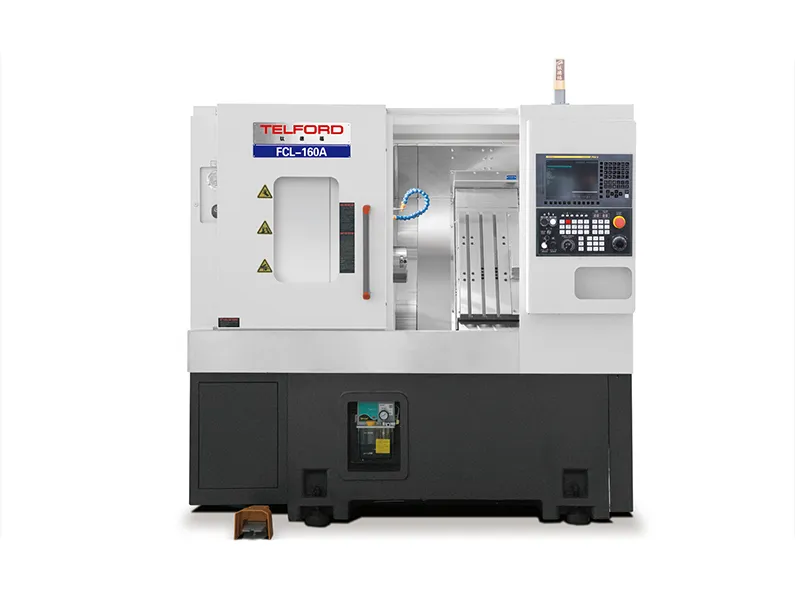
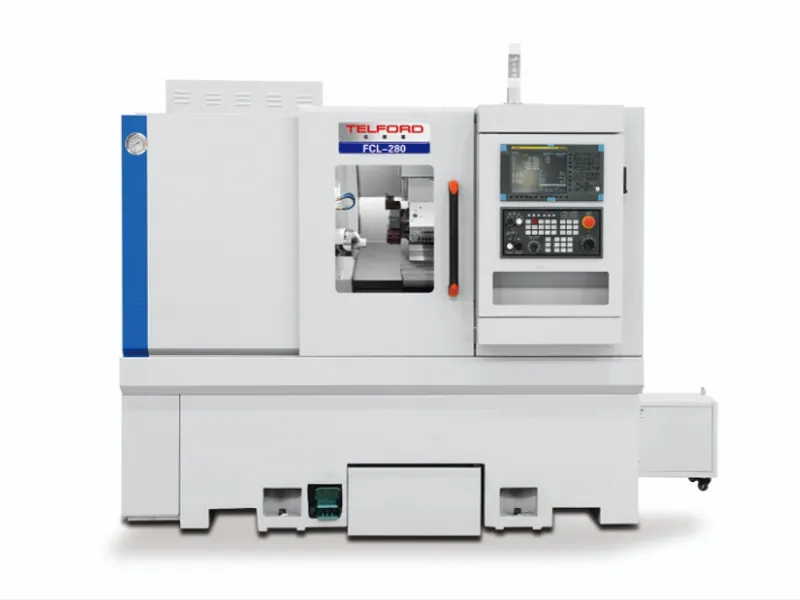
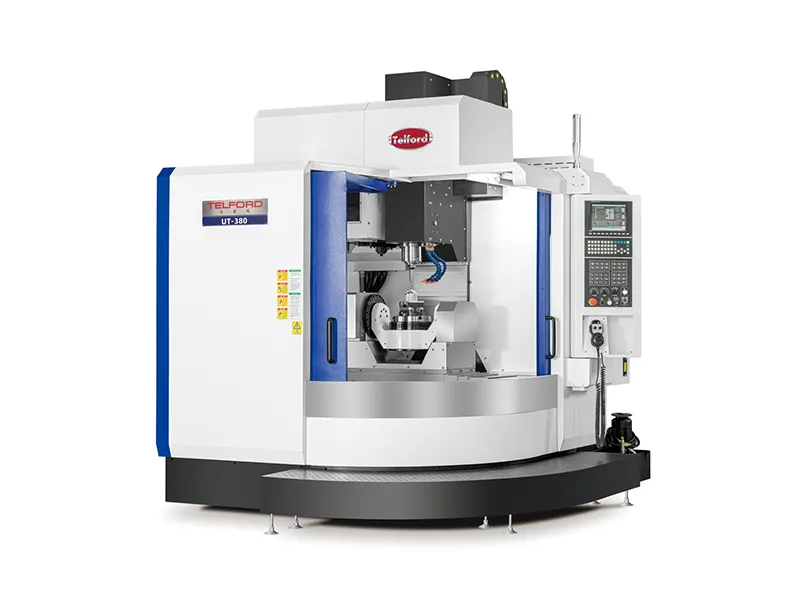
Gang-tool machines can suit small, relatively simple parts where short cycle times are important, while turret lathes provide more tool capacity for multi-operation batch production. TELFORD’s current precision-lathe range includes standard CNC lathes, tool-post lathes, turret lathes and integrated turn-mill models.
When a part also includes cross holes, flats, slots, keyways or side-milled features, repeated transfer between machines can introduce additional handling and datum errors. A turn-mill machine integrates turning, milling, drilling and tapping in one setup, helping reduce reclamping and cumulative process variation.
This does not mean a turn-mill configuration is automatically better for every project. For parts dominated by conventional turning, a dedicated precision CNC lathe may provide a simpler process and more economical production route.
CNC Machining for Precision Engineering Applications
CNC machining for precision engineering is used for rotational parts in automotive and new-energy systems, railway equipment, aerospace, medical devices, molds and general machinery. Typical workpieces include shafts, pins, sleeves, discs and flanges. TELFORD lists these industries and part types among the applications of its precision-lathe range.
Machine configuration should be based on measurable production information, including:
Maximum workpiece diameter and length
Raw material and stock dimensions
Dimensional tolerance
Required surface finish
Monthly or annual production volume
Target machining cycle
Turning, drilling or milling operations
Loading and unloading requirements
Providing these details allows the manufacturer to determine whether a standard lathe, tool-post lathe, turret lathe or turn-mill configuration is more appropriate.
What Should a High Precision CNC Lathe Manufacturer Provide?
Engineering support should begin before the quotation is finalized. Buyers should be able to submit a 2D or 3D drawing and receive a recommendation covering machine capacity, chuck or fixture, tool layout, CNC control, chip removal and automation.
A complete proposal should also define factory acceptance criteria. These may include machine geometry, spindle and axis accuracy, chuck alignment, tool changing, coolant delivery, chip removal, safety functions, sample-part dimensions, surface finish and cycle time. Acceptance requirements should be agreed before production so the buyer and supplier use the same inspection methods.
TELFORD provides CNC lathes for compact batch turning, long-shaft machining, heavier cutting and automation-ready applications. Customized workholding, tooling and loading solutions can also be evaluated according to the customer’s component drawing and production target.
FAQ About High Precision CNC Lathes
What information is needed to configure a precision CNC lathe?
Provide the part drawing, material, raw-stock size, finished diameter and length, tolerance, surface requirement, production volume, target cycle time, required processes, preferred CNC control and automation needs.
Can one precision CNC lathe process every turned component?
No. Machine capacity, spindle power, chuck size, axis travel, tooling arrangement and structural rigidity must match the part geometry and cutting load. Different machines are better suited to compact parts, long shafts, heavy cutting or multi-process components.
How can batch accuracy be verified before delivery?
Conduct a representative sample-cutting test and inspect several consecutive parts rather than only one sample. Dimensions, roundness, surface finish and cycle time should be compared under agreed machining and measurement conditions.
When is a turn-mill machine more suitable?
It is appropriate when a component requires turning together with drilling, milling, tapping, cross-hole or side-feature machining. Completing these operations in one setup can reduce handling and cumulative positioning error.
Does automation automatically improve machining accuracy?
Automation can improve loading consistency and reduce operator variation, but the gripper, chuck interface, loading orientation, finished-part discharge and inspection method must be correctly designed. Automation should be treated as part of the complete machining process.
Conclusion
Consistent batch machining depends on the interaction of machine rigidity, spindle stability, thermal control, tooling, workholding, programming and maintenance. Precision lathes must be configured for the actual workpiece and production conditions to maintain repeatable quality over long operating periods.
As a high precision CNC lathe manufacturer, TELFORD offers standard and customized turning solutions for different part sizes, processes and automation levels. Buyers can submit drawings, tolerance requirements, batch volume and cycle targets so the engineering team can recommend a suitable machine, workholding method, tooling package and supporting automation.