Producing small shafts, pins, sleeves, connectors, bushings, and other turned components in volume requires more than spindle speed and cutting power. Tool arrangement can have a major influence on non-cutting time, cycle consistency, machine footprint, setup complexity, and the range of operations that can be completed in one cycle.
Two common CNC turning configurations are the toolpost lathe, often using a gang-tool arrangement, and the turret lathe, which indexes multiple tools around a rotating turret.
Both can support automated batch production, but they solve different manufacturing problems. A gang-tool machine focuses on short tool travel and a compact machining zone, while a turret-based system provides more tool stations and greater process flexibility.
Tool Post Lathe vs Turret Lathe: The Main Structural Difference
A tool post lathe with a gang-tool layout mounts several cutting tools in fixed positions along a tooling plate or slide.
Instead of rotating a turret to bring the next tool into position, the machine moves the slide so that the required tool approaches the workpiece.
The basic sequence may be:
turning tool → drilling tool → boring tool → grooving tool → cutoff tool.
A turret lathe stores tools around an indexing turret. When the process changes, the turret rotates until the next tool station reaches the machining position.
This difference affects cycle time and flexibility.
Gang tooling eliminates turret indexing for each tool change, which can reduce idle movement on short-cycle parts.
Turret systems, however, can accommodate more tools and complex tool combinations, making them useful when one workpiece requires many operations.
Gang Tool Layout: Why Short Tool Travel Can Reduce Cycle Time
For very small components, actual cutting time may be short.
If turning takes only a few seconds, every additional tool-change movement becomes a meaningful percentage of the complete cycle.
A toolpost lathe can minimize this non-cutting time because tools are already arranged close to the machining area.
Instead of:
finish operation → retract → index turret → reposition → begin next operation,
the machine can move directly between neighboring tool positions.
This makes gang-tool machines particularly attractive for repeated production of:
The benefit becomes more noticeable as production quantity increases.
Saving even one or two seconds per cycle can become significant when tens of thousands of identical parts are produced.
However, effective gang-tooling requires careful layout. Tools must be positioned to avoid interference while maintaining enough access for adjustment and chip clearance.
Turret Tooling: When More Tool Stations Improve Flexibility
A turret lathe provides a different advantage: more flexible process planning.
Complex turned parts may require:
rough turning;
finish turning;
OD grooving;
ID boring;
drilling;
threading;
parting;
specialty form tools.
A turret can hold multiple tools simultaneously and index between them automatically.
This makes it easier to keep more operations inside one setup.
For manufacturers producing several component families, the additional tool stations can also reduce the frequency of manual tool changes during product changeover.
The trade-off is that turret indexing introduces additional movement into the cycle.
For a complex component, this is usually acceptable because the flexibility adds more value than the seconds lost during indexing.
For a very simple pin produced in extremely high volume, a tool post lathe may achieve a shorter cycle.
The correct choice therefore depends on part complexity and repetition.
Small Shafts, Pins and Simple Parts: Which Machine Is More Efficient?
Small shaft-type components are one of the strongest applications for gang-tool machines.
Consider a part requiring:
facing;
OD turning;
drilling;
grooving;
cutoff.
If the part is short, simple, and produced continuously, the compact tool arrangement of a toolpost lathe can reduce unnecessary travel.
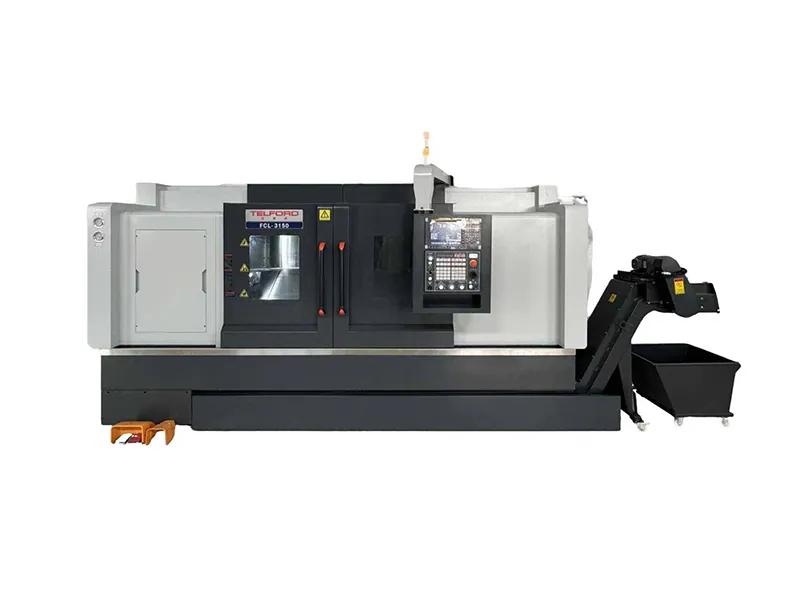
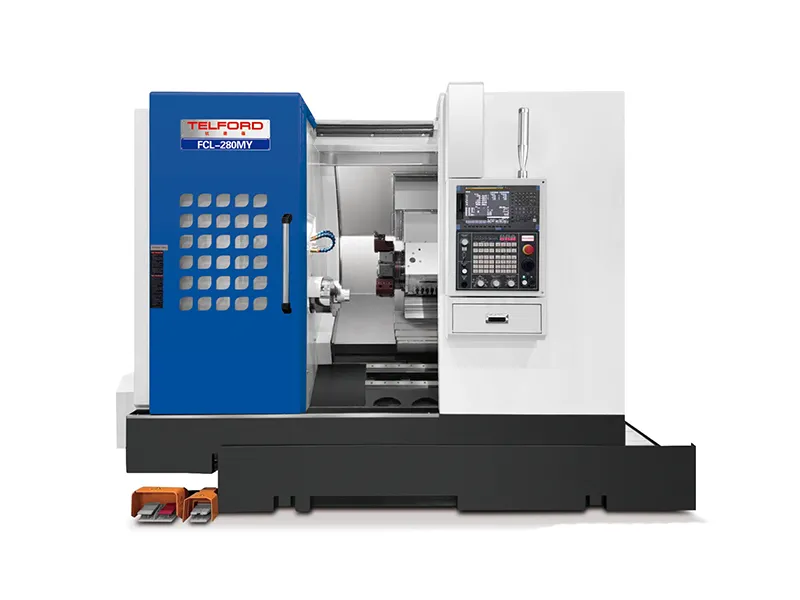
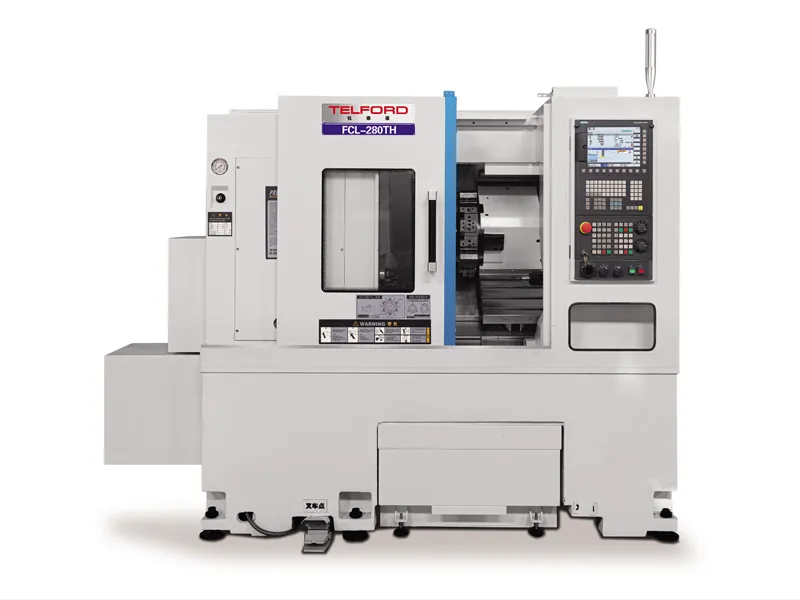
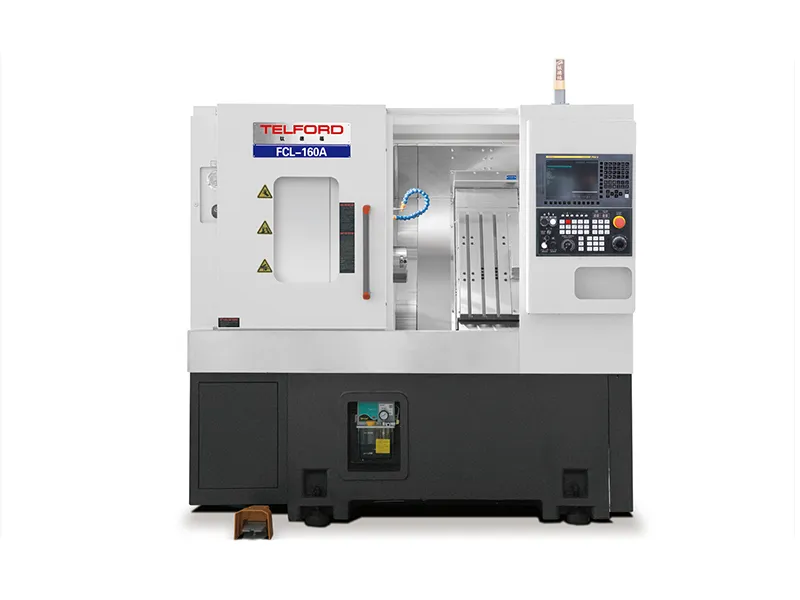
TELFORD's tool-post lathe range is designed for small precision shaft and pin-type production, making this architecture particularly relevant where short cycle time and compact machine size are priorities.
A turret lathe may become more suitable when the same part additionally requires several internal tools, threading, complex grooves, or other operations that increase total tooling requirements.
Part tolerance matters too.
A short-cycle machine is useful only if it maintains dimensional consistency throughout long production runs.
Buyers should therefore compare:
Machine architecture should support both productivity and process stability.
Part Variety and Changeover: When a Turret Becomes More Practical
Production volume alone does not determine the correct machine.
Part variety matters just as much.
A factory producing one simple shaft continuously may benefit from a dedicated tool post lathe configuration optimized around that component.
A job shop producing dozens of part numbers every week may need greater tooling flexibility.
With a turret lathe, several frequently used tools can remain installed. Operators can switch programs and make limited tooling adjustments rather than rebuilding a complete gang-tool layout for every new part.
This can reduce setup effort when:
batch sizes are moderate;
part designs change frequently;
more machining operations are required;
internal and external tools must both be available.
Gang tooling can still support multiple products, but available tooling space becomes a practical limit.
Manufacturers should therefore consider annual product mix, not only the cycle time of one sample part.
Machine Footprint, Maintenance and Production Cost Compared
Gang-tool machines are often compact because they do not require a large rotating turret assembly.
This can be valuable in factories where floor space is limited or several machines need to be arranged into an automated production cell.
A smaller machining zone can also reduce tool travel.
Turret machines generally contain more moving and indexing components, but their tooling flexibility may reduce the need for secondary operations or additional machines.
The total cost comparison should therefore include:
machine cost + tooling + floor space + labor + cycle time + setup time + secondary operations
Maintenance requirements differ as well.
A toolpost lathe has a relatively straightforward tooling layout, while a turret system requires reliable indexing and positioning mechanisms.
Neither architecture is inherently cheaper over its entire life.
The better machine is the one that produces the required part mix with the lowest stable cost per acceptable component.
Tool Post Lathe vs Turret Lathe FAQs
What is a toolpost lathe best suited for?
A toolpost lathe with gang tooling is particularly suitable for small, relatively simple turned components produced in high quantities.
Why can gang tooling be faster?
Tools are mounted in fixed positions close to the workpiece, reducing the need for turret indexing between operations.
When is a turret lathe better?
A turret lathe is often preferable when parts require many tools, several machining operations, or frequent product changes.
Can a tool post lathe perform drilling and boring?
Yes, depending on the tooling configuration and machine specification, drilling, boring, grooving, turning, and cutoff operations can be arranged on the tool plate.
Which machine is better for a job shop?
A turret configuration can offer greater flexibility when many different parts are produced in relatively small or medium batches.
Choosing between a toolpost lathe and turret lathe should therefore begin with the part family. Simple high-volume components favor short tool travel and compact tooling, while complex or frequently changing parts benefit from additional turret stations and process flexibility.