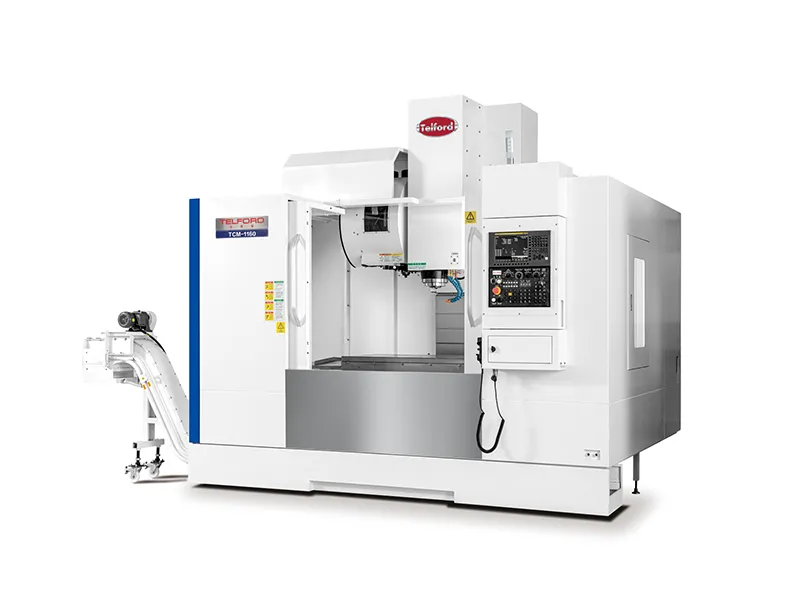
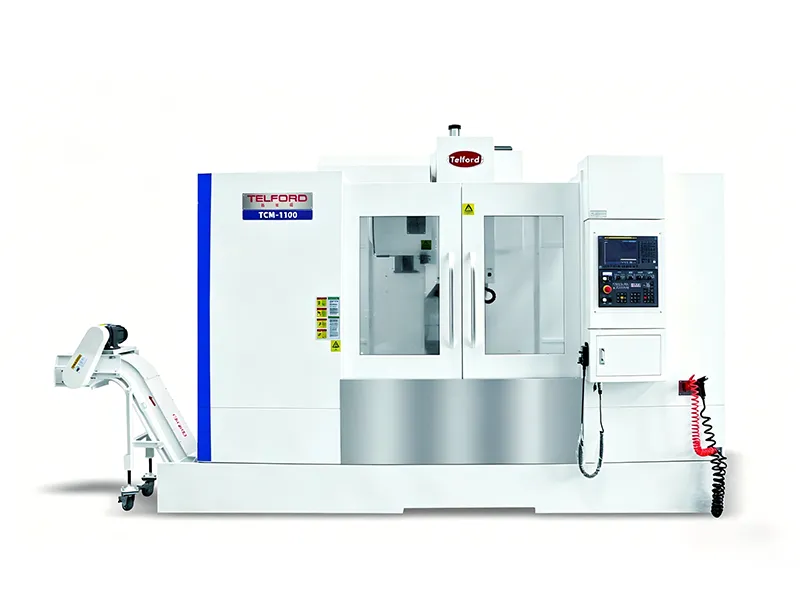
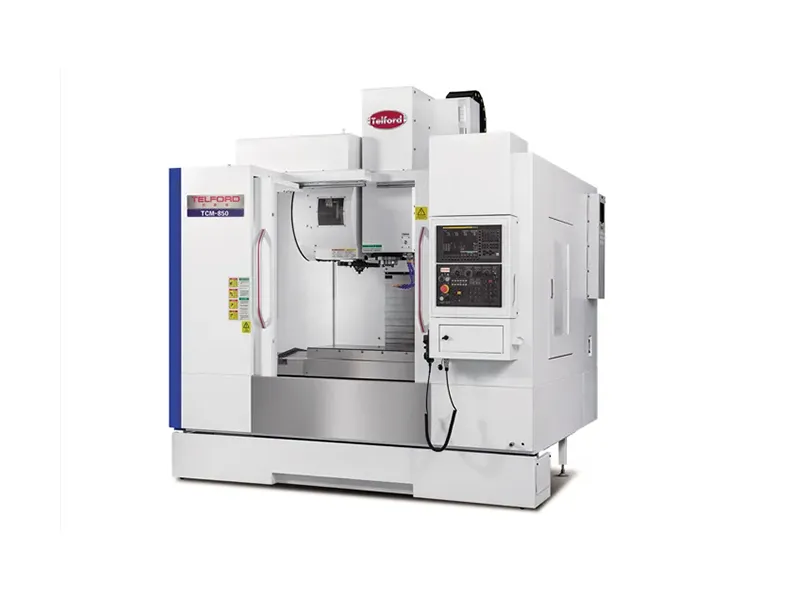
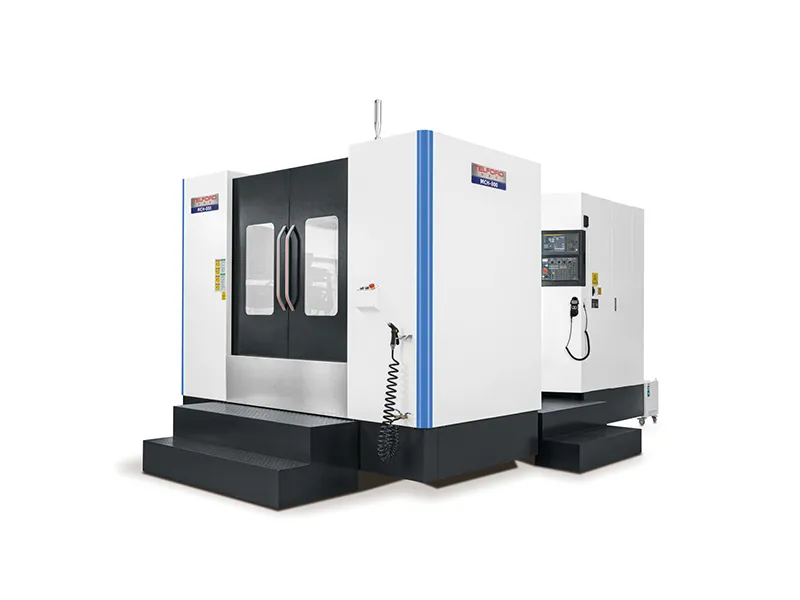
Large molds, machine bases, structural plates, energy-industry components, rail parts, and heavy industrial workpieces create a different set of machining challenges from small precision components.
The workpiece may be several meters long and weigh many tons. A machine must provide enough axis travel to reach the complete part while maintaining rigidity and positioning accuracy across a large working envelope.
This is where gantry cnc architecture becomes particularly useful.
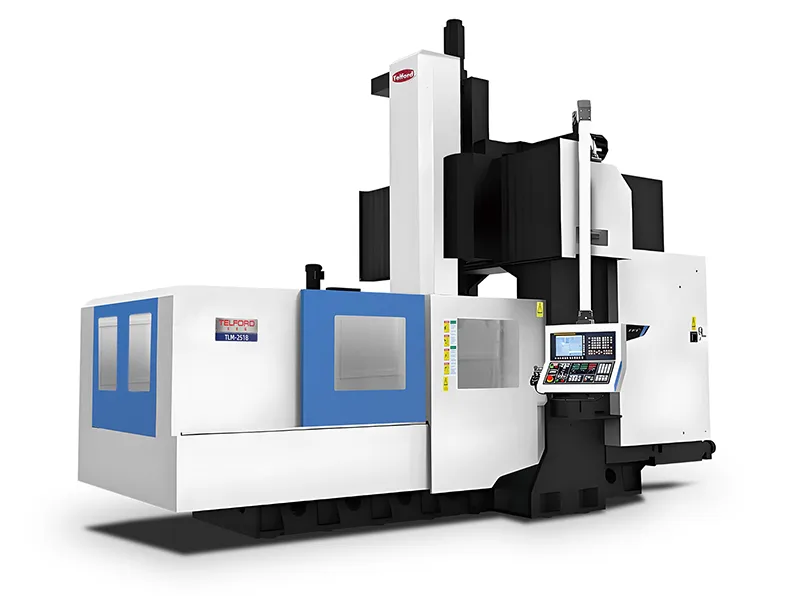
A gantry machining center uses a bridge-like structure spanning the worktable, allowing the spindle to move across large workpieces while the machine supports substantial cutting loads.
Selecting one, however, involves much more than choosing the longest available X-axis travel.
Why Large Workpieces Change CNC Machine Selection
A small part can often be repositioned when machine travel is limited.
A multi-ton structural component cannot.
For large workpieces, the machine envelope must accommodate:
component length;
component width;
component height;
fixture dimensions;
tool access.
Weight becomes equally important.
The working table must support the combined mass of the component and fixture without compromising machine performance.
This makes gantry cnc selection fundamentally different from choosing a standard machining center.
Buyers need to define the largest representative component rather than only the average part size.
A project producing five-meter structural parts, for example, needs sufficient axis travel plus additional clearance for safe approach and tool movement.
Future product size should also be considered if the machine is expected to serve several programs over many years.
Gantry CNC Structure: Why the Bridge Design Matters
The defining feature of a gantry milling machine is the bridge structure positioned over the worktable.
Depending on machine design, columns and a crossbeam support the spindle assembly as it moves across the working envelope.
This architecture provides several advantages for large components.
The workpiece can remain supported on a broad table while the spindle travels above and around it.
This avoids the need to move a very heavy workpiece through large distances as part of normal axis motion.
Structural design influences:
rigidity;
vibration resistance;
axis accuracy;
cutting capacity.
For heavy machining, bridge stiffness is particularly important because the spindle may operate far from the center of the machine envelope.
The machine must remain stable not only at one point but throughout the complete travel range.
This is why machine weight, structural design, guideways, and crossbeam construction all deserve attention during procurement.
Travel, Table Size and Load Capacity: Which Specification Matters Most?
These specifications must be evaluated together.
Axis Travel
X-axis travel determines how far the spindle can move along the length of the part.
Y travel determines cross-machine coverage.
Z travel influences access to tall workpieces and deep features.
Table Size
The physical worktable must provide sufficient support for the component and fixture.
A long X-axis is not useful if the table itself cannot accommodate the actual workpiece.
Load Capacity
A heavy mold or machine base may weigh several tons before clamping fixtures are added.
TELFORD's gantry machining center range includes configurations extending into very long travel and heavy table-load classes, making the platform relevant to large industrial components.
When reviewing a machine, buyers should therefore calculate:
part weight + fixture weight + auxiliary equipment
rather than using nominal workpiece weight alone.
The largest machine is also not automatically the best.
Oversizing unnecessarily increases capital cost, floor-space requirements, and potentially energy consumption.
Rigidity and Heavy Cutting on Large Molds and Structural Parts
A large working envelope can create challenges for rigidity.
The spindle may perform heavy milling several meters from the machine's structural center while encountering varying material conditions.
Chatter becomes a serious concern when:
A rigid gantry milling machine helps resist these cutting forces.
For mold machining, the machine may need to support both roughing and finishing.
Roughing requires high material removal capability.
Finishing requires smooth motion and stable positioning over large surfaces.
Therefore, buyers should consider more than maximum spindle speed.
Important factors include:
spindle torque;
machine structure;
guideway configuration;
thermal stability;
acceleration;
positioning accuracy;
tool capacity.
Large-part machining is often a long-cycle process. Small instability repeated over many hours can influence final dimensional quality.
Gantry CNC vs Standard Vertical Machining Center
A standard VMC is often more economical and efficient for small and medium components.
Its compact structure makes it well suited to general machining, smaller molds, plates, and production parts.
A gantry cnc becomes more attractive as workpiece size and weight increase.
A useful comparison is:
| Factor | Standard VMC | Gantry CNC |
|---|
| Workpiece size | Small to medium | Medium to very large |
| Table load | Moderate | High to very high |
| Floor space | Lower | Higher |
| Long-axis travel | Limited | Strong advantage |
| Heavy structural parts | Limited by model | Major application |
| Capital investment | Lower | Higher |
A manufacturer should not choose a gantry machine simply because it appears more powerful.
The additional size and cost need to solve a real production requirement.
However, forcing a large component onto an undersized machine can require multiple setups, repositioning, outsourcing, or reduced machining access.
The correct comparison is therefore based on total process efficiency.
What Buyers Should Provide When Sourcing a Gantry Milling Machine
A quotation for gantry machining equipment should begin with actual workpiece data.
Provide:
maximum part length;
maximum width;
maximum height;
part weight;
fixture weight;
material;
required machining operations;
largest cutter diameter;
bore requirements;
tolerance;
surface-finish requirements;
expected annual production;
desired automation.
Representative CAD drawings are especially useful.
They allow the machine supplier to evaluate spindle access, travel, interference, and whether additional rotary heads or attachments may be needed.
Factory information should also be provided.
A large gantry machining center may require substantial foundation preparation, electrical capacity, chip-management equipment, coolant systems, and installation access.
Procurement should therefore include:
machine selection → factory layout → foundation → transportation → commissioning.
Treating these as separate decisions can create costly surprises later.
Gantry CNC FAQs
What is a gantry CNC machine used for?
A gantry cnc is commonly used for large molds, structural components, machine bases, energy equipment, heavy plates, and other large workpieces.
Why use a gantry structure for large parts?
The bridge structure allows the spindle to travel across a broad working area while the heavy workpiece remains supported on the table.
Is longer X-axis travel always better?
No. Travel should match the actual workpiece and required clearance. Excessive capacity can increase machine cost without improving production.
How important is table load?
Very important. The machine must support both the workpiece and fixture within its specified load capacity.
Can a gantry machine perform finishing as well as heavy roughing?
Yes, depending on machine design, spindle, control system, thermal stability, and required accuracy.
What information should buyers provide?
Provide part drawings, dimensions, weight, material, machining operations, tolerances, tooling requirements, annual volume, and factory installation conditions.
A successful gantry machining project starts by defining the workpiece, not the machine. Travel, table dimensions, load capacity, spindle performance, structural rigidity, and factory installation requirements must all be matched to the real production process before a gantry machining center is selected.